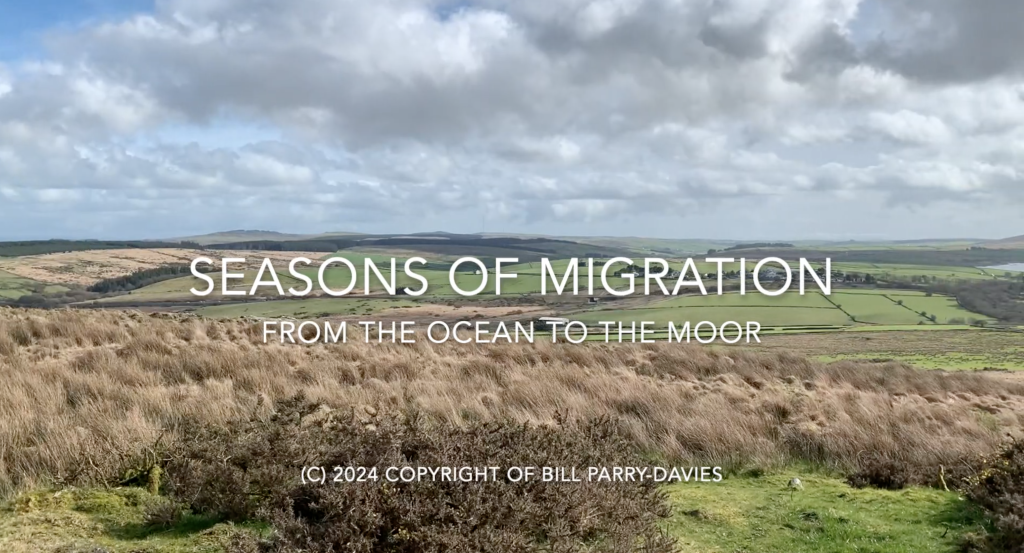
“Seasons of Migration – from the ocean to the moor”

“Seasons of Migration – from the ocean to the moor” is a short film highlighting the beauty of Cornwall’s iconic Fowey river and the ancient legend of Saint Neot’s miracle of the three fish which took place there. It traces the path of migrating salmon, through nature’s four seasons, from the river’s coastal estuary to its source on Bodmin Moor. Once bounteous, these fish are now facing extinction.
“Seasons of Migration” also reveals an ancient, but forgotten, truth about nature and sustainability. It was first recorded over 1,000 years ago and later memorialised in the 1530 “Life of St. Neot” stained glass window in the village’s mediaeval church. The film is enhanced by a sound track with field recordings made along the river banks and flowing piano and double bass improvisations.
If you liked the film, and want to help to conserve our natural environment, you could buy a copy. The profit from its sales are donated to the ‘not for profit’ Fowey Rivers Association and to the Atlantic Salmon Trust , to help meet the costs of their research into the causes of the extinction and them protecting and enhancing the natural environment of rivers and nurturing migratory fish.
You can watch the full film by clicking on this link

I’d been exploring the Fowey river back home in Cornwall for many years. When I discovered I could make films using just my iPhone, and add field recordings and music , I fulfilled a long held ambition to tell the story of the river and its inhabitants. After many visits over two years I hope to have captured something of natures fragile beauty. But none of this was possible without the generous help of my collaborators, including gifted musicians, who shared my vision .
Collaborations with Iain Sinclair

I first bumped into Iain at a heated public meeting where the community were demanding that the Council explain itself for auctioning off all of its shops over the heads of its tenants in Broadway Market. One of the speakers was Spirit who, from ruin, had built his Nutritious Galley and his home above the shop and who’d become a figurehead of the campaign. I’d also spoken up about the plight of the surviving Dalston Lane Terrace traders – whose shops had also been sold off at auction in one lot to an off-shore developer. Iain cornered me as we dispersed and he later wrote about our conversation in his book “Hackney, that rose-red empire”. It was later, at the OPEN Dalston meeting to celebrate the re-opening of St. Barnabus church and hall, when Iain heard me play music and invited me to collaborate. I’d performed Michael Rosen’s “Regeneration Blues” that night , on alto saxophone in the Dulce Tones jazz quintet, and Michael had then auctioned the Dalston Slab’s £63million bus stop for the bargain price of £7.50p.

After a trial run with Iain at Dalston’s Vortex jazz club, I found myself on stage with him in the South Bank’s Queen Elizabeth Hall talking and playing tenor saxophone to extracts from “Ghost Milk” on the theme of exhumation of the radioactive wastes buried in the landfill dumps beneath London Olympic 2012 site in Hackney Wick. Hearing of the event a friend, the photographer and investigative journalist Mike Wells, came with a film camera and recorded our performance for posterity in his film “Gold Dust”.

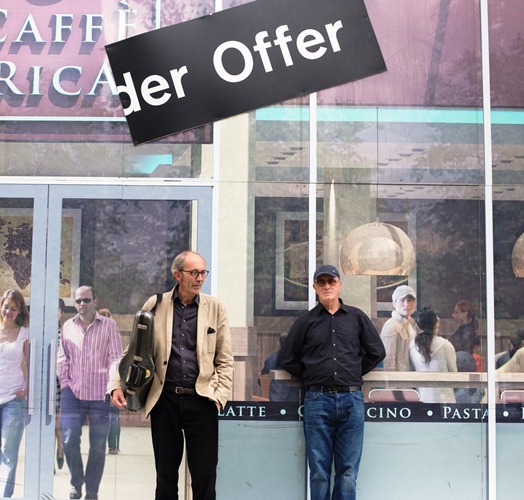
More gigs followed – an art event fundraiser for the Golden Lane Estate campaign, performances at the Poets Library and Passing Clouds and others, all in the jazz tradition of ephemeral improvisation. Then Iain suggested we commit something permanent to vinyl. Our CD “Under Offer” resulted, with my son Adam handing the recording and production as well as contributing compositions and playing. It was released alongside Iain’s book “The Last London” – famously banned by Hackney which was a great boost to sales. We performed to a sold out Cafe Oto crowd with the gig building to a frenetic climax with “Shardenfreude”. I was well chuffed by a glowing review in the Financial Times.